Embracing the Mystery of Existence
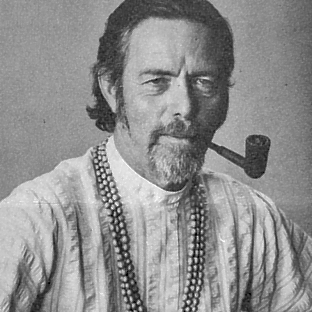
Alan Watts invites us to reconsider our approach to life with his profound assertion: "Life is not a problem to be solved. It is a mystery to be lived." This statement challenges the pervasive tendency to view life through a lens of problem-solving, urging us instead to embrace the inherent mystery that life presents. In a world often dominated by the need for answers and resolutions, Watts beckons us to engage with life as a rich tapestry of experiences, emotions, and uncertainties, suggesting that the essence of living lies in our ability to immerse ourselves in this mystery.
To live life as a mystery rather than a problem is to shift our focus from control and resolution to acceptance and exploration. This perspective encourages a deeper engagement with the present moment, allowing us to experience life in its fullness rather than merely seeking to navigate through it. By recognizing the fluidity and unpredictability of existence, we open ourselves to a more profound understanding of our place within the universe, fostering a sense of wonder and curiosity that can transform our daily experiences.
The image / the metaphor
Watts's quote employs vivid imagery that contrasts the rigidity of problem-solving with the fluidity of mystery. The verb "solved" evokes a sense of finality and closure, suggesting a linear approach to life where challenges are merely obstacles to be overcome. In contrast, the word "lived" embodies a dynamic and ongoing process, inviting us to engage with life as an unfolding narrative filled with possibilities. This imagery evokes a felt sense of adventure, where each moment is an invitation to explore rather than a challenge to conquer.
Diving deeper into the metaphor, we can see that viewing life as a mystery encourages us to embrace uncertainty and ambiguity. It suggests that rather than seeking definitive answers, we should cultivate an openness to the unknown. This perspective aligns with the Zen understanding of existence, where the journey is as significant as the destination, and where the act of living itself becomes a sacred practice. In this light, life transforms from a series of problems to be solved into a rich, ever-evolving experience to be savored.
In the speaker's tradition
Alan Watts, a prominent figure in the popularization of Eastern philosophy in the West, draws heavily from Zen Buddhism, which emphasizes the importance of direct experience and the acceptance of impermanence. Concepts such as *sunyata* (emptiness) and *dharma* (the natural order of the universe) resonate deeply with the idea that life is not a series of problems but a mystery to be engaged with. In Zen, the practice of *zazen* (sitting meditation) embodies this teaching, encouraging practitioners to observe their thoughts and feelings without judgment, fostering a sense of presence and acceptance.
In his work, Watts often references the notion of *kenosis*, or self-emptying, which aligns with the idea of relinquishing the need to control or solve life's complexities. This concept invites us to let go of our preconceived notions and embrace the fluidity of existence. In *The Wisdom of Insecurity*, Watts articulates the importance of living fully in the present moment, echoing the teachings found in classic Zen texts such as the *Heart Sutra*, which emphasizes the interconnectedness of all things and the liberation found in embracing the unknown.
Living the teaching
Consider a modern scenario where this teaching might resonate: a person facing a significant life change, such as a career transition. Instead of viewing this shift as a problem to be solved—complete with anxiety about the future and a checklist of steps to take—one might embrace the uncertainty as a mystery to be lived. This approach allows for exploration and discovery, where the individual can engage with new opportunities and experiences without the pressure of needing to have everything figured out. By reframing the situation, they can cultivate a sense of curiosity and openness, transforming what could be a stressful time into an adventure of self-discovery.
In relationships, this teaching can manifest in moments of conflict or misunderstanding. Rather than approaching these situations as problems to be resolved through argument or negotiation, one might choose to engage with the mystery of the relationship itself. This could involve deep listening, vulnerability, and a willingness to explore the emotions at play without the immediate need for resolution. By embracing the complexity of human connection, individuals can foster deeper intimacy and understanding, allowing the relationship to evolve organically rather than forcing it into predefined solutions.
A reflection
As we contemplate Watts's invitation to view life as a mystery, we might ask ourselves: What would it mean to embrace the uncertainties in my life as opportunities for growth and exploration? This question invites us to reflect on our own experiences, encouraging us to consider how we might shift our perspective from one of problem-solving to one of living fully in the present moment. In doing so, we open ourselves to the richness of existence, allowing the mystery of life to unfold in all its complexity and beauty.




Join the BrightStar Community
Stay connected with daily inspiration, event announcements, and community wisdom