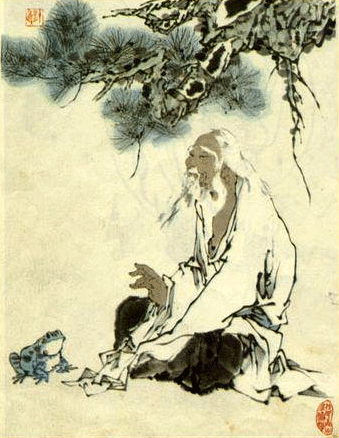
Lightening the Load: The Wisdom of Emptiness
Chuang Tzu invites us to "empty thy boat" and "lighten it," suggesting that by shedding unnecessary burdens, we can navigate the waters of life with greater ease. This metaphor speaks to the human condition, where we often find ourselves weighed down by attachments, expectations, and the clutter of our thoughts. In a world that constantly demands more from us, the wisdom of this teaching becomes increasingly relevant, urging us to reconsider what we truly need to carry on our journey.
To lighten our load is not merely a practical suggestion; it is a profound spiritual practice. The act of emptying our boat signifies a willingness to let go of what no longer serves us, creating space for clarity, peace, and a deeper connection to the flow of life. In this way, Chuang Tzu's words resonate with the essence of Taoism, which emphasizes harmony with the natural world and the importance of simplicity in our lives.
The image / the metaphor
The imagery of a boat evokes a sense of journeying across the vast waters of existence. A boat, a vessel designed for movement, becomes cumbersome when overloaded. The verbs "empty" and "lighten" suggest an active engagement with our inner lives, encouraging us to take responsibility for what we carry. This imagery invites us to visualize our burdens—be they emotional, psychological, or material—as weights that hinder our progress and impede our ability to navigate smoothly through life.
Diving deeper into the metaphor, the boat represents our individual selves, while the act of emptying symbolizes the process of self-discovery and transformation. Just as a boat moves more easily through water when it is not weighed down, so too do we find greater ease and grace when we release our attachments and fears. This metaphor serves as a reminder that the journey is not about accumulation but about the art of letting go, allowing us to embrace the fluidity of existence.
In the speaker's tradition
Chuang Tzu's teachings are steeped in the principles of Taoism, which emphasizes the importance of living in accordance with the Tao, or the natural way of the universe. Concepts such as "wu wei," or effortless action, align closely with the idea of lightening one's load. By relinquishing the need to control every aspect of our lives, we can move with the currents of existence rather than against them. This notion of surrendering to the flow is echoed in various spiritual traditions, including the Buddhist concept of "sunyata," or emptiness, which encourages a release from the attachments that bind us.
In the text of the Zhuangzi, we find numerous anecdotes that illustrate the value of simplicity and the dangers of overcomplication. For instance, the story of the "Useless Tree" highlights how the most unassuming and seemingly useless aspects of life often hold the greatest wisdom. Chuang Tzu's philosophy invites us to embrace the idea that by letting go of our preconceived notions of value and success, we can discover a more profound sense of freedom and authenticity.
Living the teaching
Consider a modern scenario where the teaching of lightening one's load can be applied: the overwhelming nature of daily responsibilities. Many individuals find themselves juggling work, family obligations, and social commitments, often leading to burnout and stress. By consciously choosing to prioritize what truly matters and letting go of extraneous tasks, one can create a more balanced and fulfilling life. This process may involve saying no to certain obligations or reevaluating personal goals, ultimately leading to a more serene existence.
In the realm of relationships, the teaching of emptiness can also manifest powerfully. Imagine a situation where misunderstandings and expectations create tension between partners. By practicing openness and vulnerability, each person can "lighten their boat" by releasing the need to control outcomes or cling to grievances. This act of letting go fosters deeper connections and allows love to flow more freely, transforming the relationship into a space of mutual support and understanding.
A reflection
As we contemplate Chuang Tzu's invitation to empty our boats, we might ask ourselves: What burdens am I carrying that no longer serve my journey? This question invites introspection and encourages us to examine the attachments, fears, and expectations that weigh us down. In the spirit of Chuang Tzu's wisdom, let us embrace the practice of letting go, creating space for ease, clarity, and a deeper connection to the unfolding journey of life.



Join the BrightStar Community
Stay connected with daily inspiration, event announcements, and community wisdom